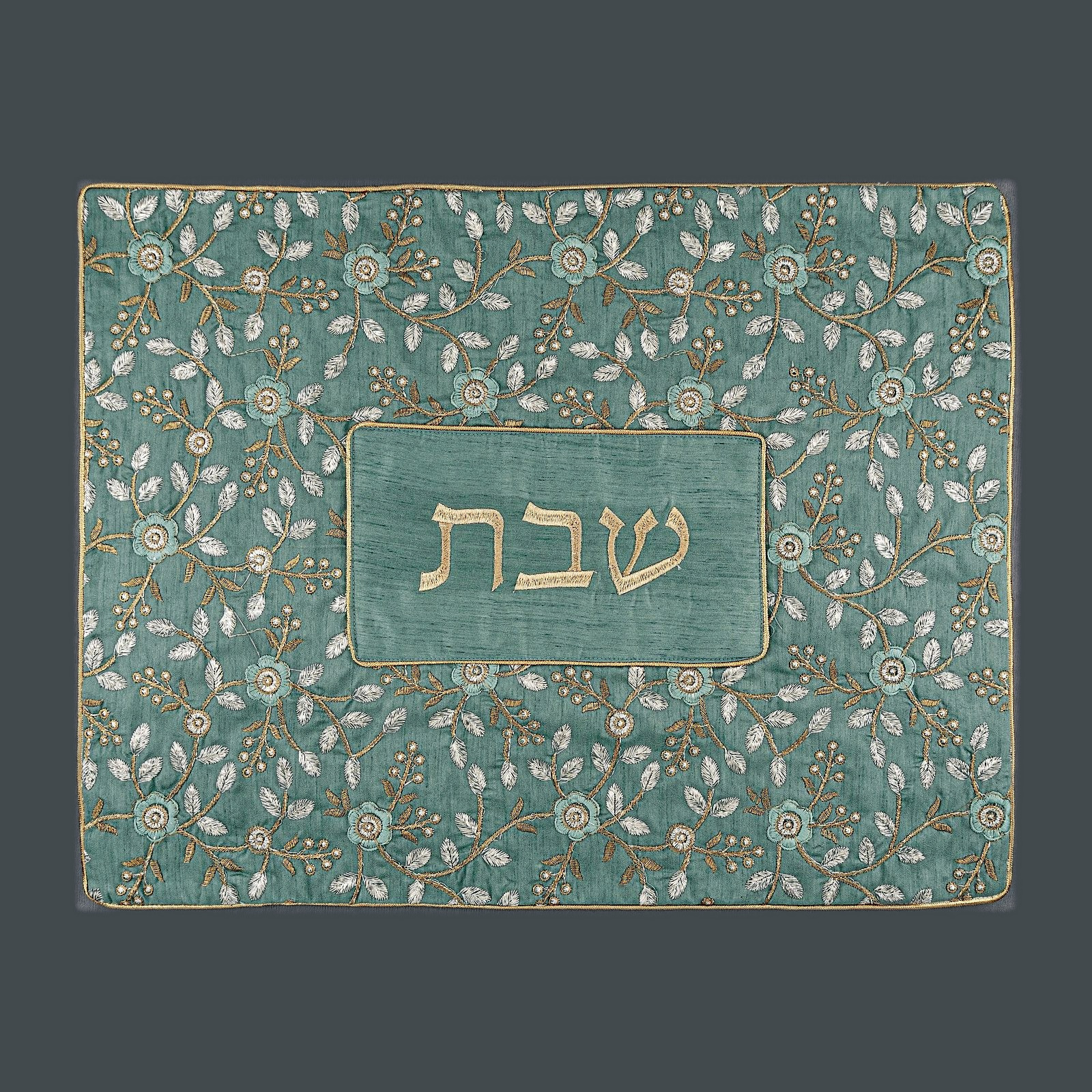
100 hours of hand embroidery
centuries of Jewish heritage.

✦ Beta
Find Your Match — Color IntelligenceColor Intelligence
Upload your table photo · Get the model that harmonises
Try it →Try Now
Challah Covers — Bareket Collection
Challah Covers

Explore our Challah Cover collections beautifully crafted for your Shabbat table.

Shop collection
Atarot

Explore this spectacular collection of hand embroidered atarot (tallit collar) with which to beautify any tallit.

COMING SOON
✦ You're on the list. We'll be in touch.
A Heritage Embroidered in Gold

From the courts of Persia
to your Shabbat table

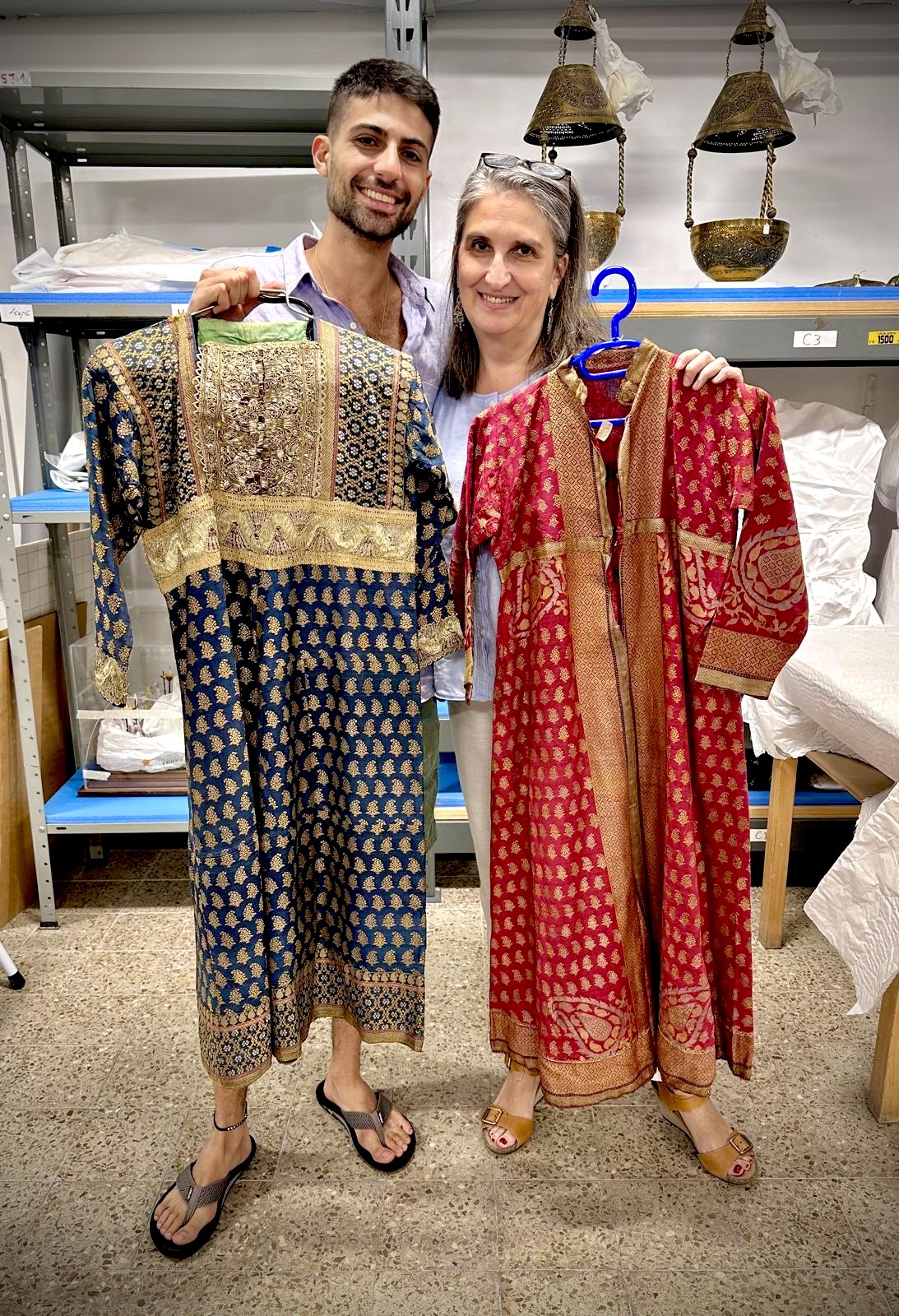
A craft carried from Persia to India to Jerusalem — Zardozi, gold and silver hand-embroidery, its name Persian for gold and sewing. Reborn now in our New Delhi studio, in challah covers worked by hand for the modern Shabbat table.

Read the full story →
The Zardozi Technique

How each cover
is made

1
Design & Pattern

Each design is drawn by hand in Jerusalem, inspired by antique ketubot, Torah mantles, and synagogue ornament. All motifs redrawn through the lens of Jewish symbolism. No two covers are identical.

2
Gold & Silver Thread Work

Gold- and silver-finished metallic threads hand-stitched with traditional Zardozi needles in our New Delhi studio. Depending on the model, 40 to 130 hours per piece.

3
Finishing & Beading

Pearls, crystal beads and hand-knotted fringe added individually in Jerusalem. Two countries, two cities, two sets of hands.

“These past years have taught us what it takes to stand for our country, and for who we are. For me, Malqeta is that same work in a quieter language — carrying our heritage, our tradition, and our culture forward, proudly and unapologetically.”

David Yair Haruni · Founder

The Collections

Shani challah cover
Shani
שָׁנִי — Crimson
Machine-embroidered polysilk with gold and silver threading. Luminous and light — made for every Friday night table.
₪ 350
~$95 USD
Explore Collection →
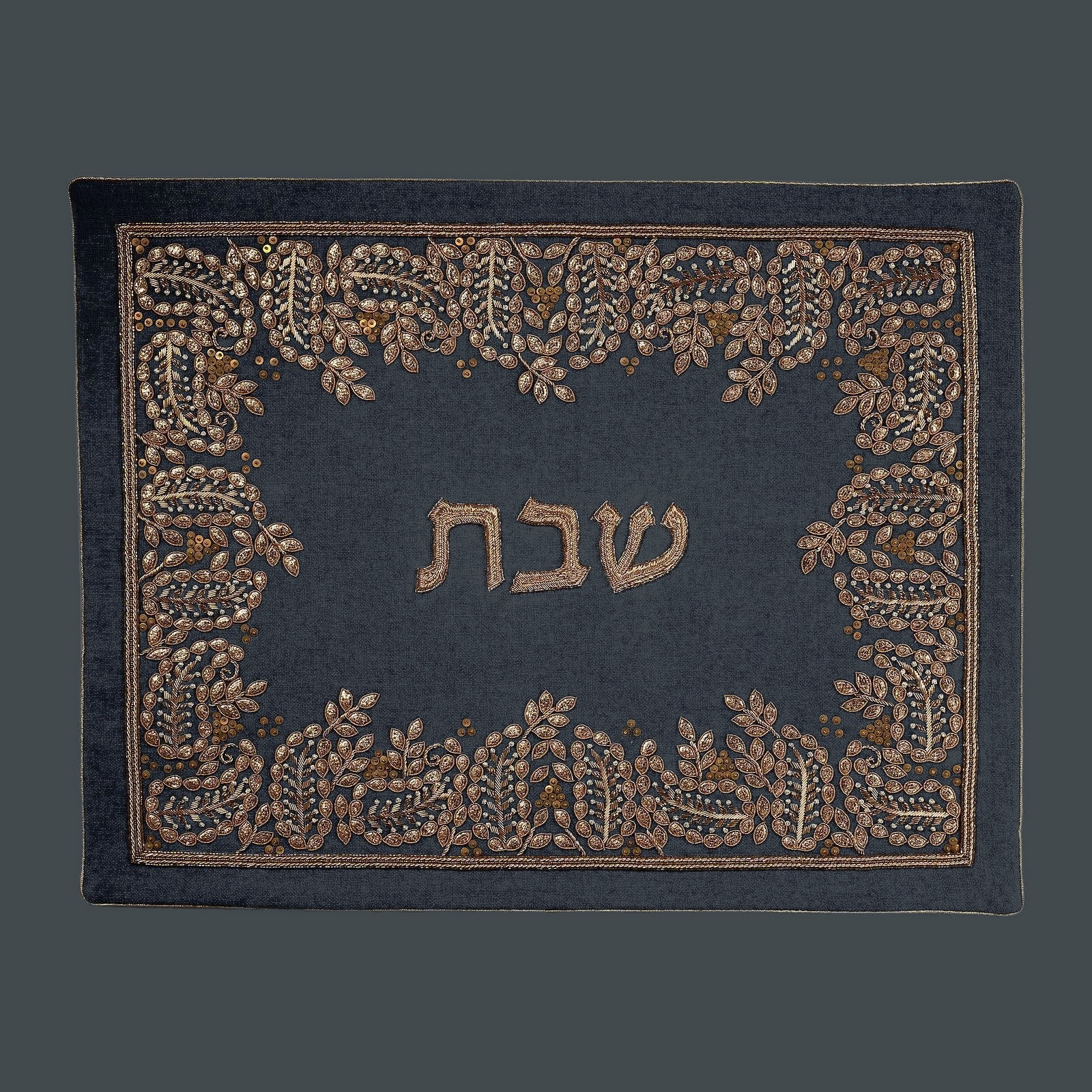
Bareket challah cover
Bareket
בָּרֶקֶת — Emerald
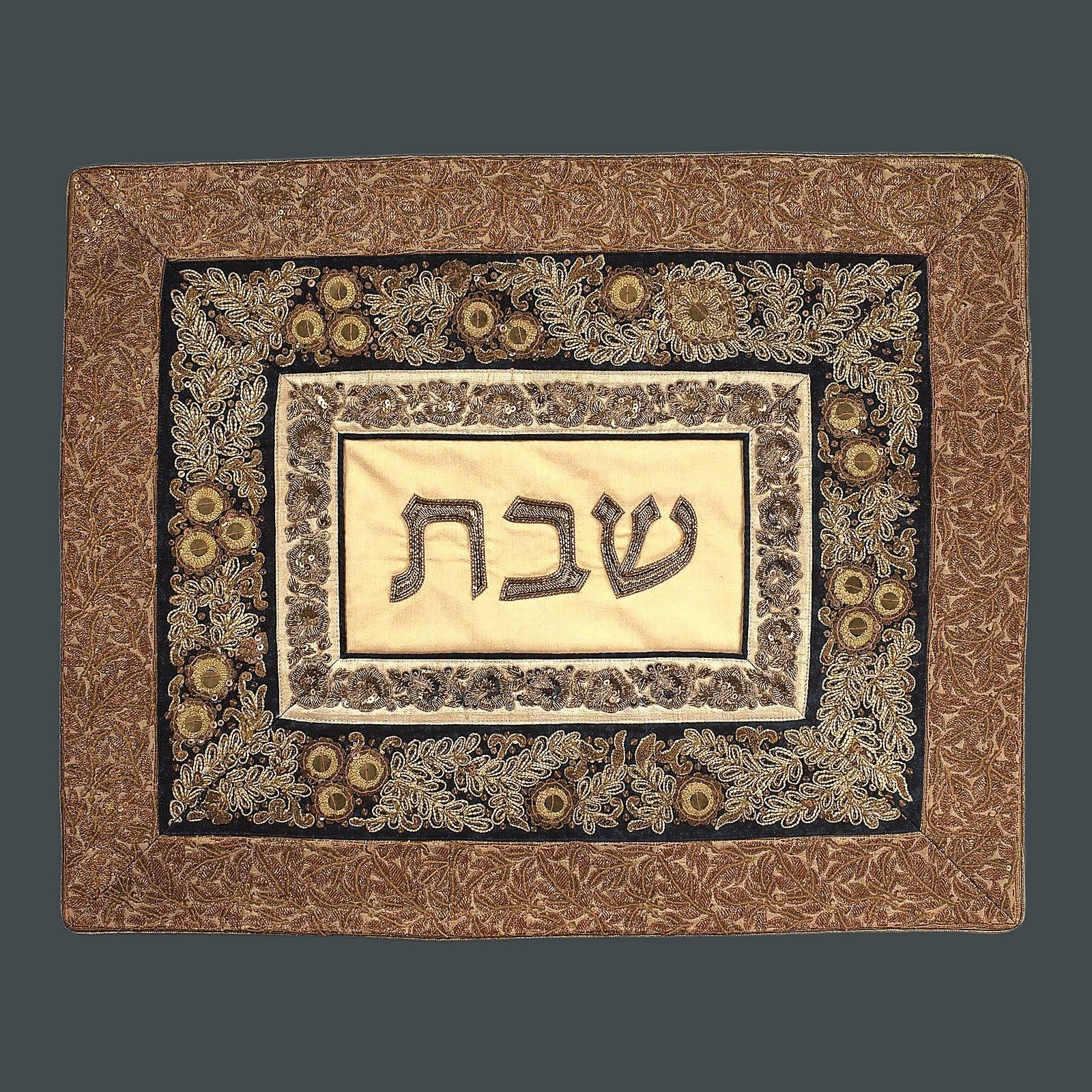
Linen and velvet — hand-embroidered gold and silver Zardozi thread over 40–130 hours, finished with pearls, crystals and glass beads.
₪ 1,050 – 3,400
~$285–$930 USD
Explore Collection →
Argaman challah cover
Argaman
אַרְגָּמָן — Purple
Rare antique hand-embroidered fabrics, each piece uniquely sourced and matched. Every Argaman cover is singular — never repeated.
Press & Recognition

As Seen In

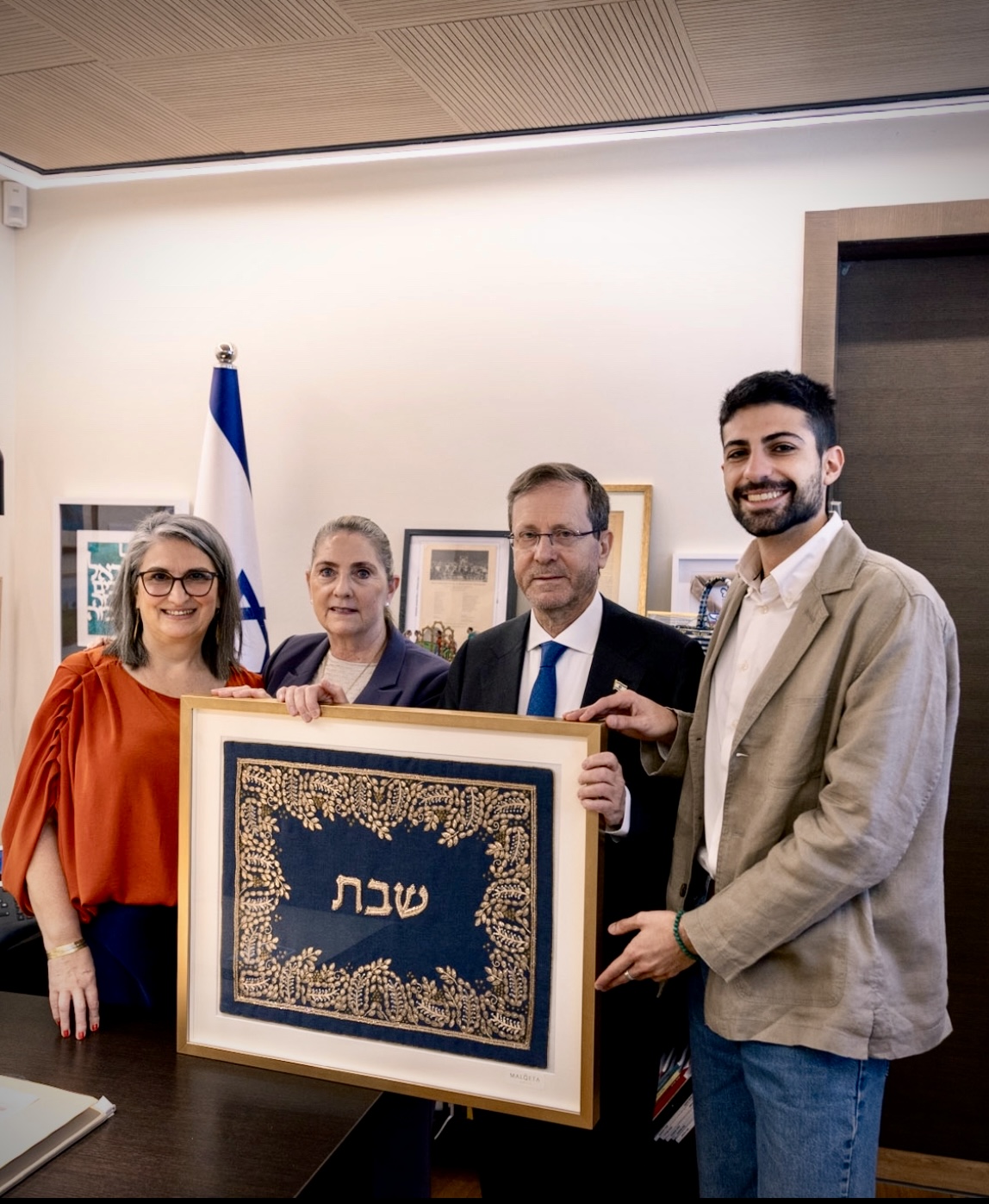
Malqeta challah cover presented to President Isaac Herzog and the First Lady at Beit HaNassi
President's Residence, Jerusalem · 2024
Presented to President Isaac Herzog and the First Lady — at Beit HaNassi.
At Beit HaNassi · 2024
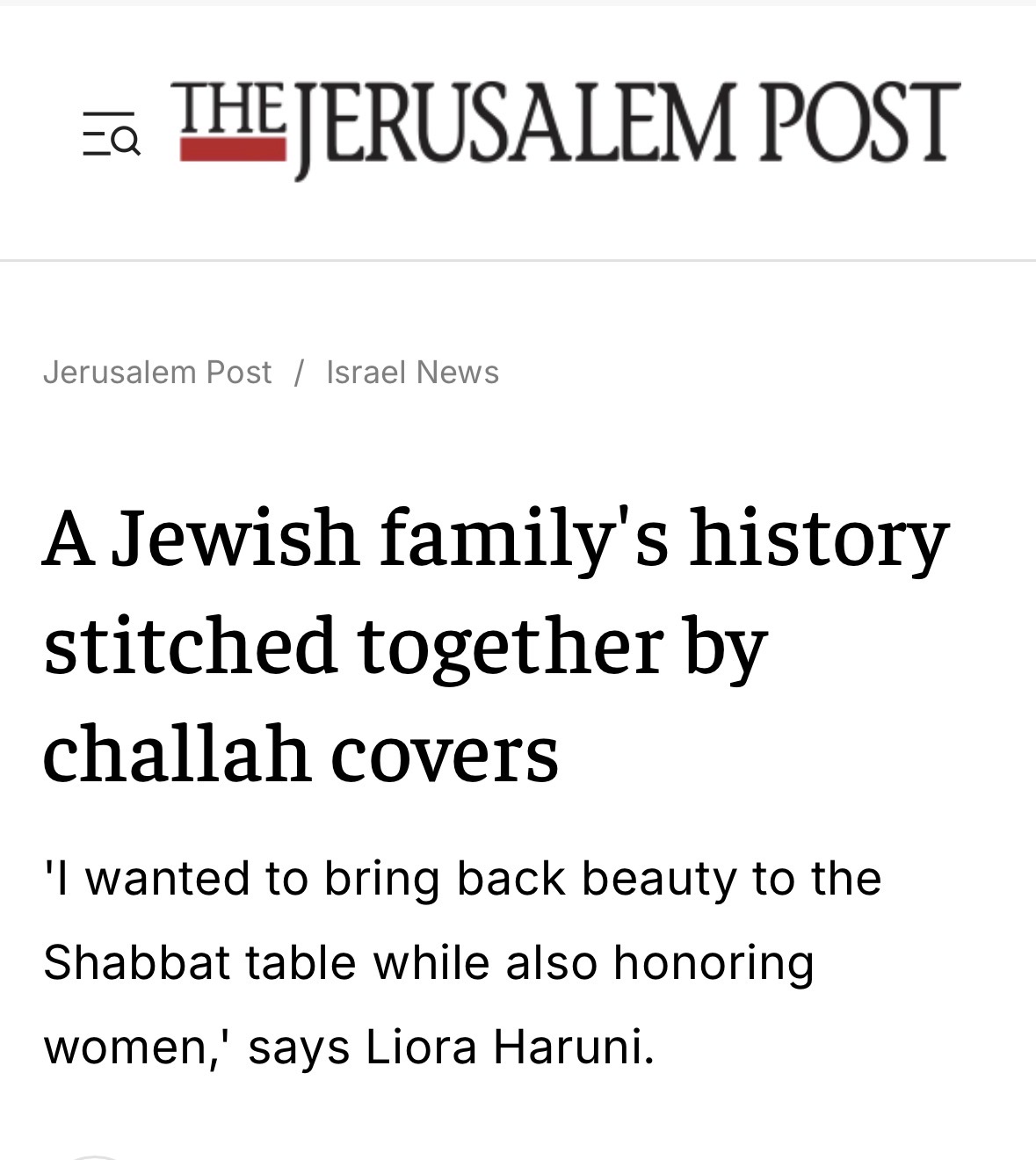
Jerusalem Post feature on Malqeta
The Jerusalem Post · December 2024
I Wanted Judaism to Feel Real — and to Look Like It
Feature article on Malqeta's founding story and Zardozi heritage
Read Article →
Her Tribe Magazine feature on Malqeta
“Her Tribe” Magazine · Pesach 2026
Ancient craft, modern table. The challah covers rewriting Jewish luxury.
Cover feature on the intersection of heritage and contemporary Judaica
Read Article →
Home
Loading article…
In the Home

The cover on the table

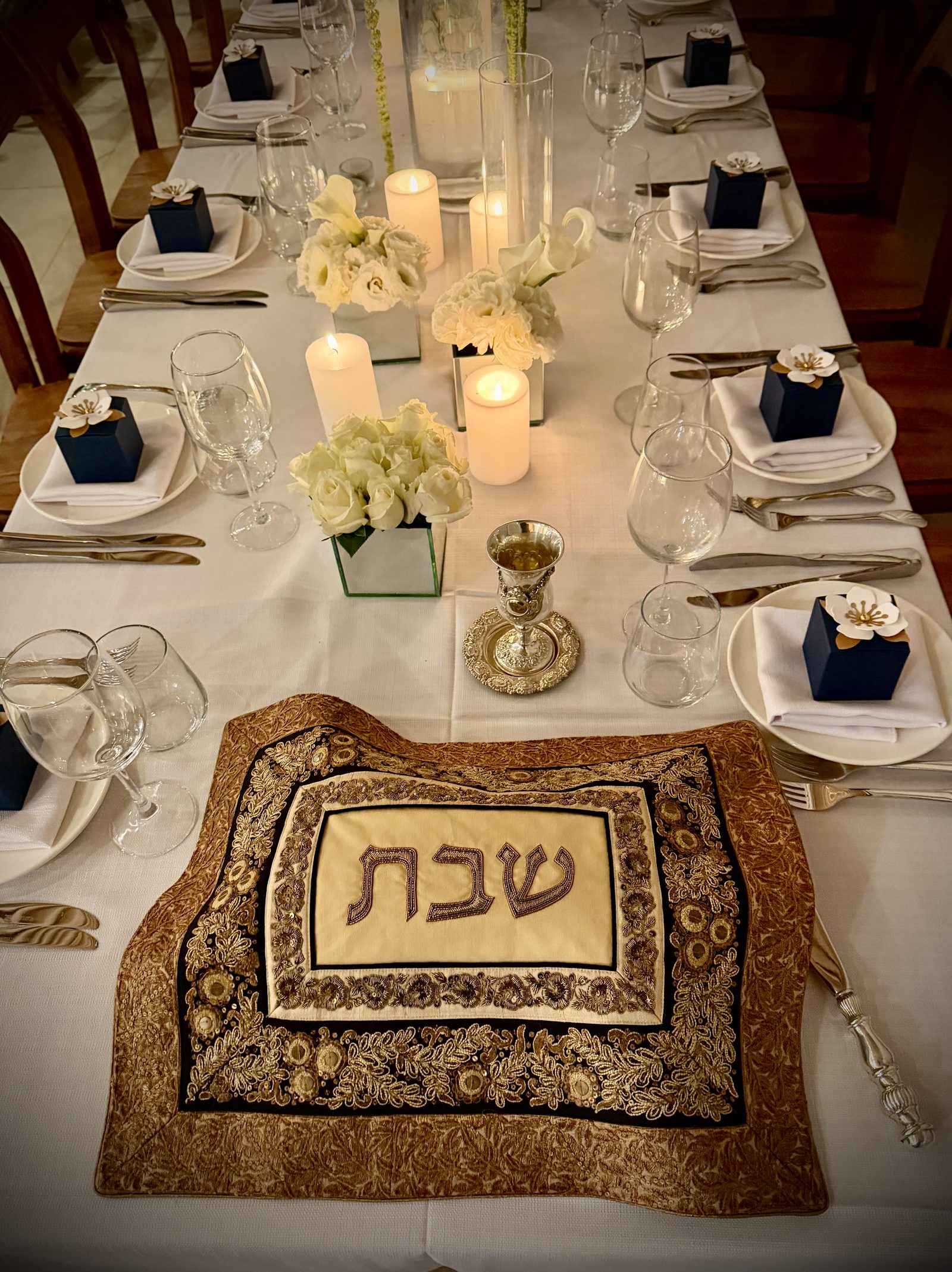
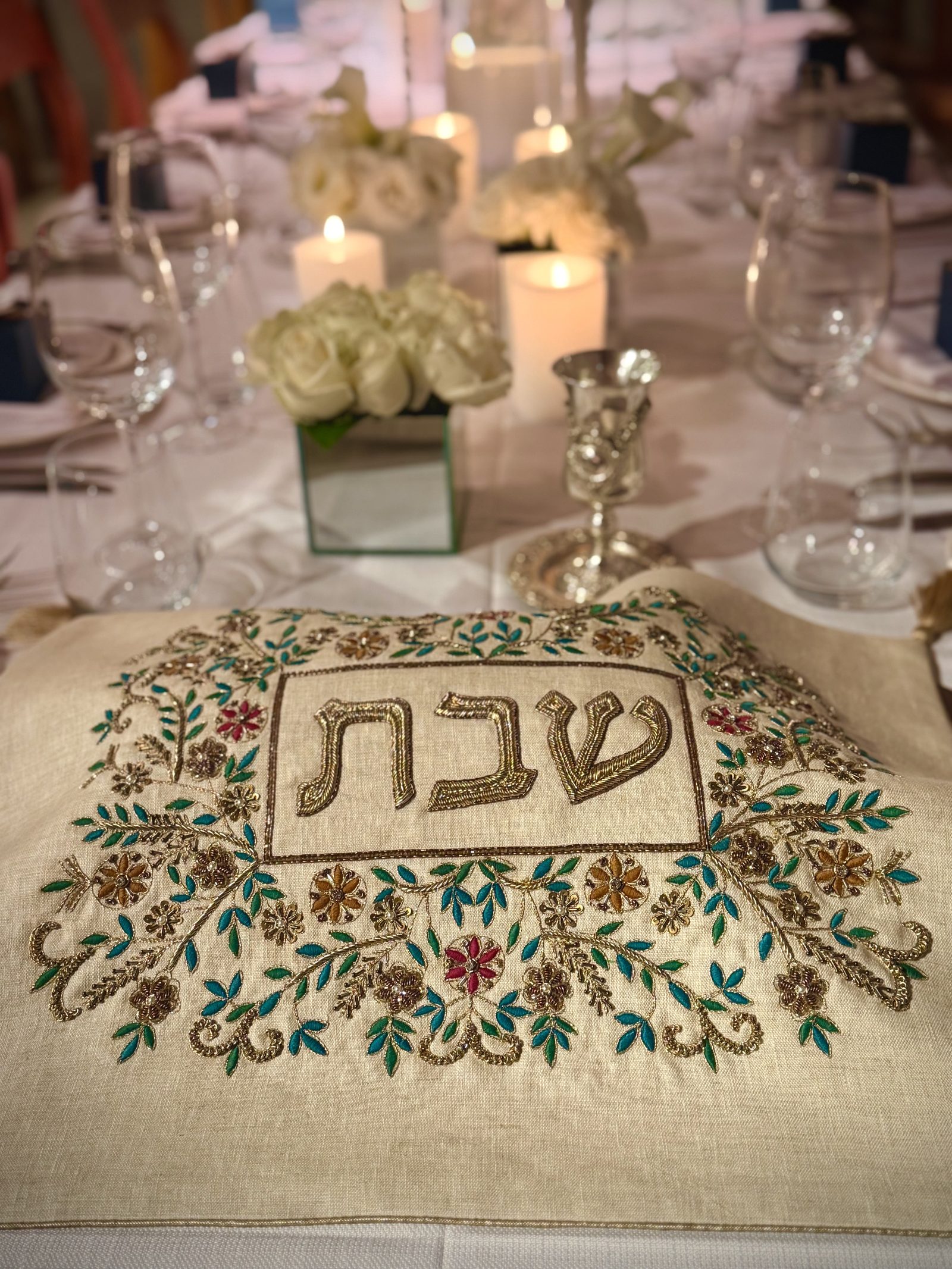
Styled Shabbat table with Malqeta challah cover
Shabbat table with candles and flowers
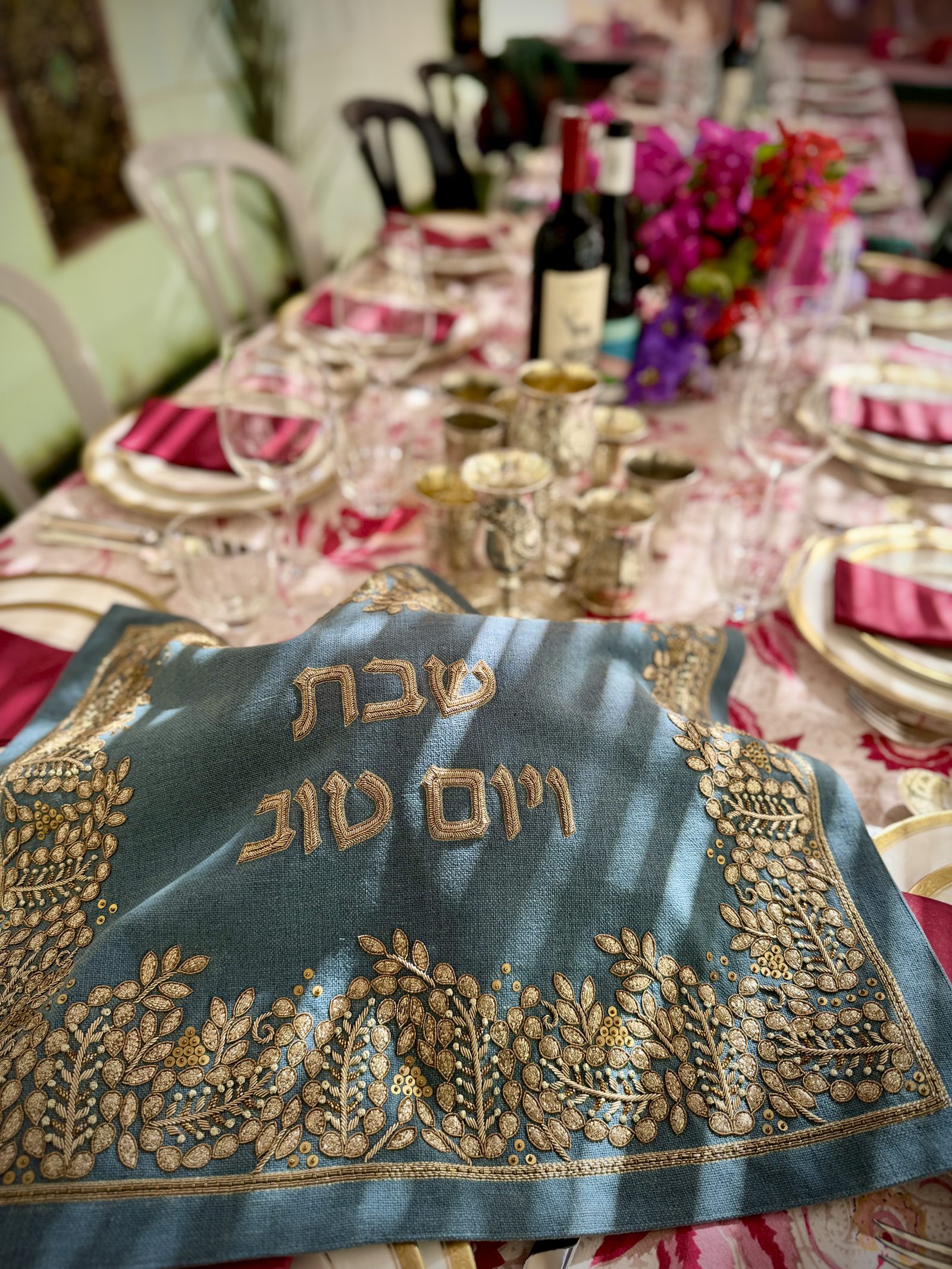
Challah cover embroidery detail
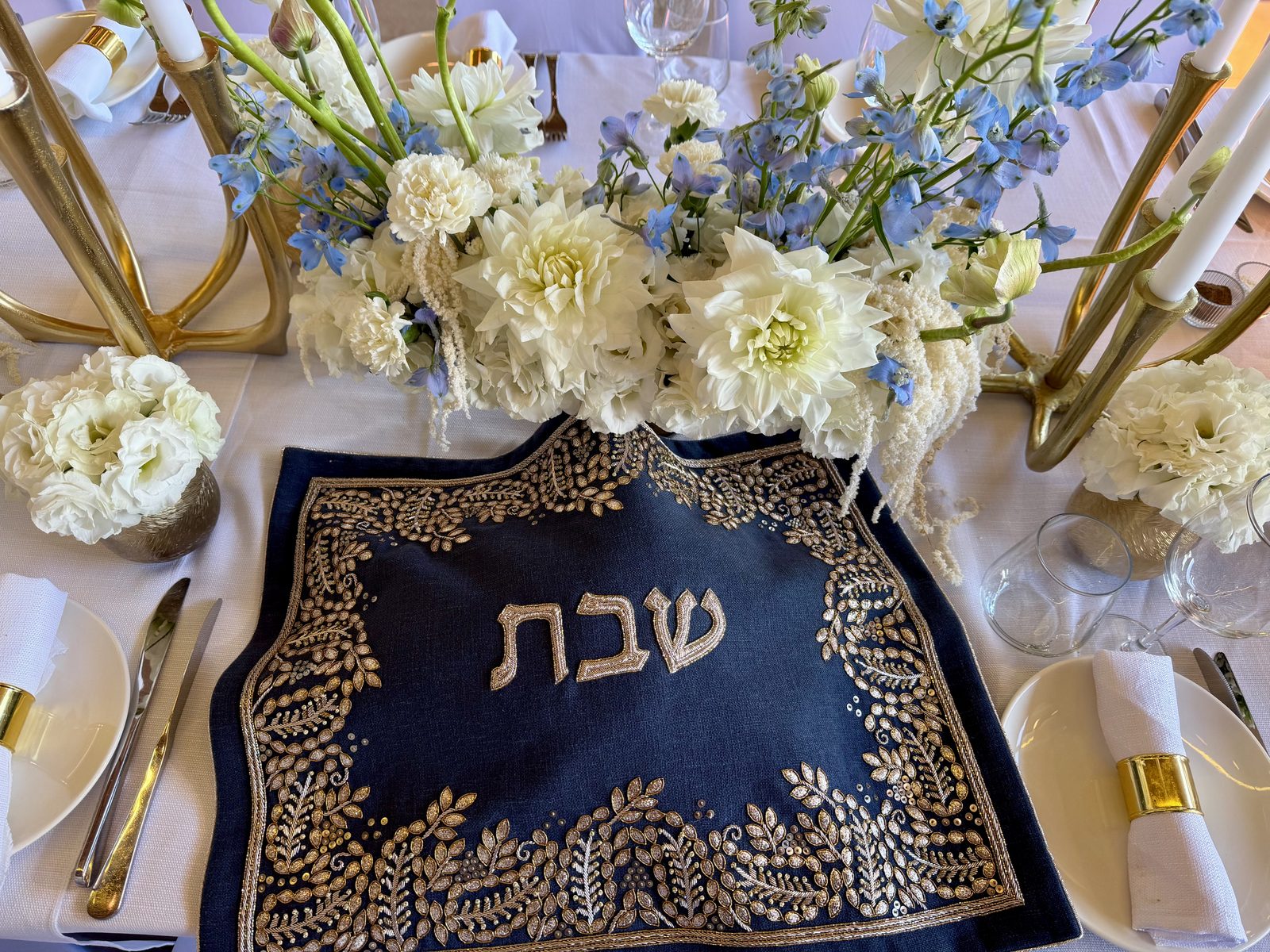
Challah cover on table
For the Shabbat Table

Challah Recipes

01
Challah Prince
The 6-Strand

6 strands. Zero excuses. An easy, deeply satisfying challah from the Challah Prince — perfect for your Friday table. No stress. Just flow.

~2 hrs
Beginner
2 challahs
View full recipe →
02
Saffron & Orange Blossom
Persian Challah

Woven with the scents of Persia — saffron steeped in rosewater, a breath of orange blossom water folded through the dough. Fragrant, golden, and quietly extraordinary.

3.5 hrs
Intermediate
2 loaves
View full recipe →
03
Traditional Golden
Challah

The recipe that came with every Malqeta challah cover — a classic, golden, egg-enriched challah for the Shabbat table. Double the quantities to perform Hafrashat Challah.

3–4 hrs
Beginner
4 challahs
View full recipe →
הַפְרָשַׁת חַלָּה
Hafrashat Challah

The mitzvah of separating challah comes from Numbers 15 — upon entering the Land of Israel, the Jewish people were commanded to set aside the first portion of their dough as an offering to the Kohanim, the temple priests. That separated portion was called challah.

Today, though the Temple no longer stands, we preserve this sacred act. When we make challah, we separate a small piece of dough and recite a blessing. This ritual — hafrashat challah — is one of the three mitzvot traditionally associated with Jewish women, binding the act of baking to the life of the spirit.

Beyond the Shabbat Table

When you bring Malqeta
to your Shabbat table

Ten percent of every order goes to Hachnasat Kallah — helping brides in Israel stand under the chuppah and build Jewish homes.

Read more about giving back →
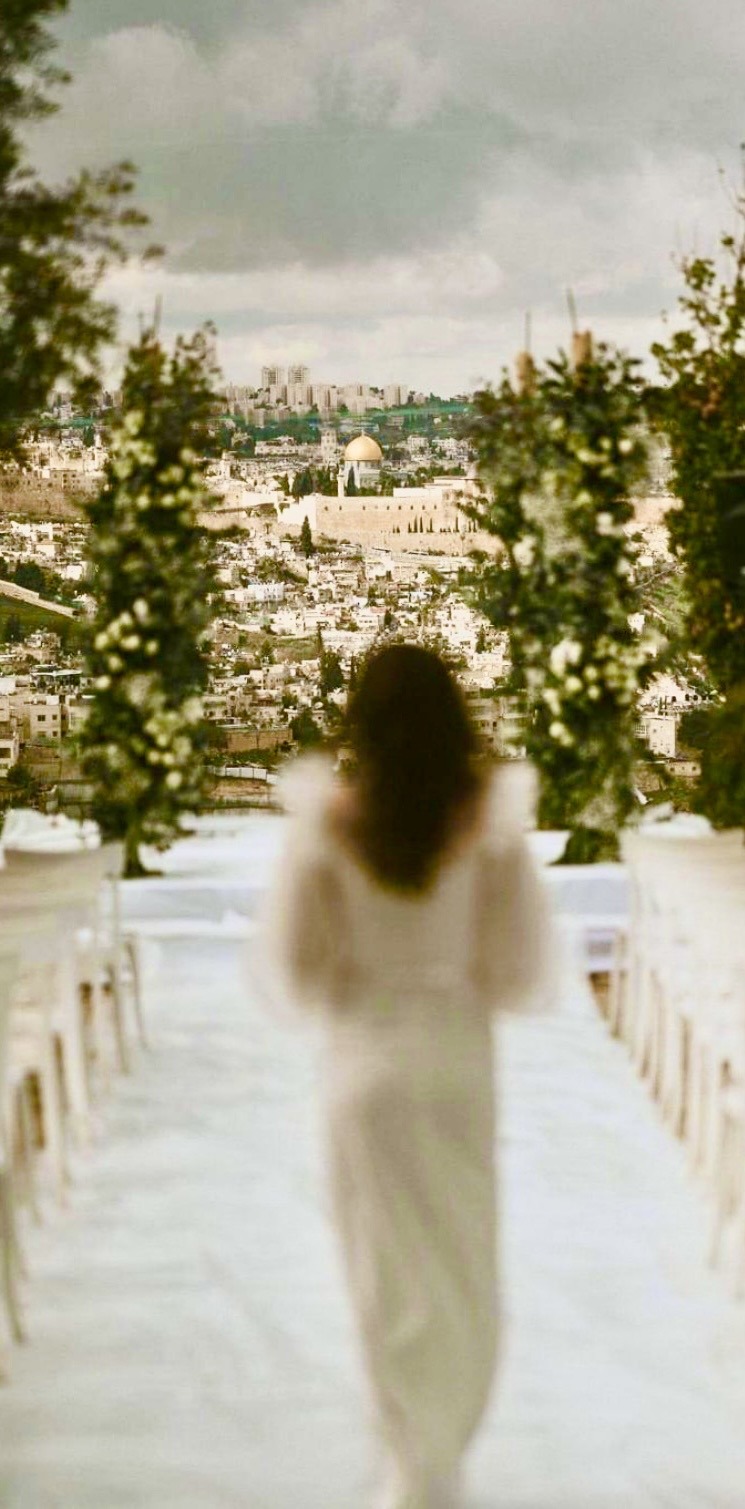
Bride — Hachnasat Kallah
10%
of our profit to Hachnasat Kallah
Helping brides build Jewish homes
Share your experience
✦  Thank you — your words mean everything to us.
Home
Total Time
Difficulty
Yield
Ingredients
Method
Home
Challah Recipes
From the Malqeta Table
Home
הַפְרָשַׁת חַלָּה
Hafrashat Challah · The Mitzvah of Separating Dough

The command comes from Numbers 15: upon entering the Land of Israel, the Jewish people were instructed to set aside the first portion of their dough — a challah — as an offering to the Kohanim. Today, though the Temple no longer stands, we honour that act. When a sufficient quantity of dough is made — over 1.67 kg of flour — we separate a small piece and recite a blessing, dedicating it as we once dedicated it to the priests.

This mitzvah is one of the three traditionally associated with Jewish women, bound to the hearth and the Shabbat table. It transforms the act of baking from something domestic into something holy.

How To Perform It

1. Before braiding your dough, bring all portions together into one mass and recite the blessing below.

2. Pinch off a small piece of dough — the size of an olive is sufficient. Hold it in your hand as you say: "Harei zeh challah" — "This is challah."

3. Wrap the separated piece in foil and burn it, or set it aside so it will not be eaten. (In Israel, some give it to a Kohen; outside Israel it is burned or disposed of respectfully.)

4. Continue to braid and bake your challahs as usual. The mitzvah is complete.

בָּרוּךְ אַתָּה יְיָ אֱלֹהֵינוּ מֶלֶךְ הָעוֹלָם, אֲשֶׁר קִדְּשָׁנוּ בְּמִצְוֹתָיו וְצִוָּנוּ לְהַפְרִישׁ חַלָּה
Baruch Atah Adonai, Eloheinu Melech ha-olam, asher kideshanu be-mitzvotav ve-tzivanu le-hafrish challah.

Note: The blessing is recited when using 1.67 kg or more of flour. When using between 1.23 kg and 1.67 kg, separate the dough without a blessing. Below 1.23 kg, no separation is required.

Home